
Melmex
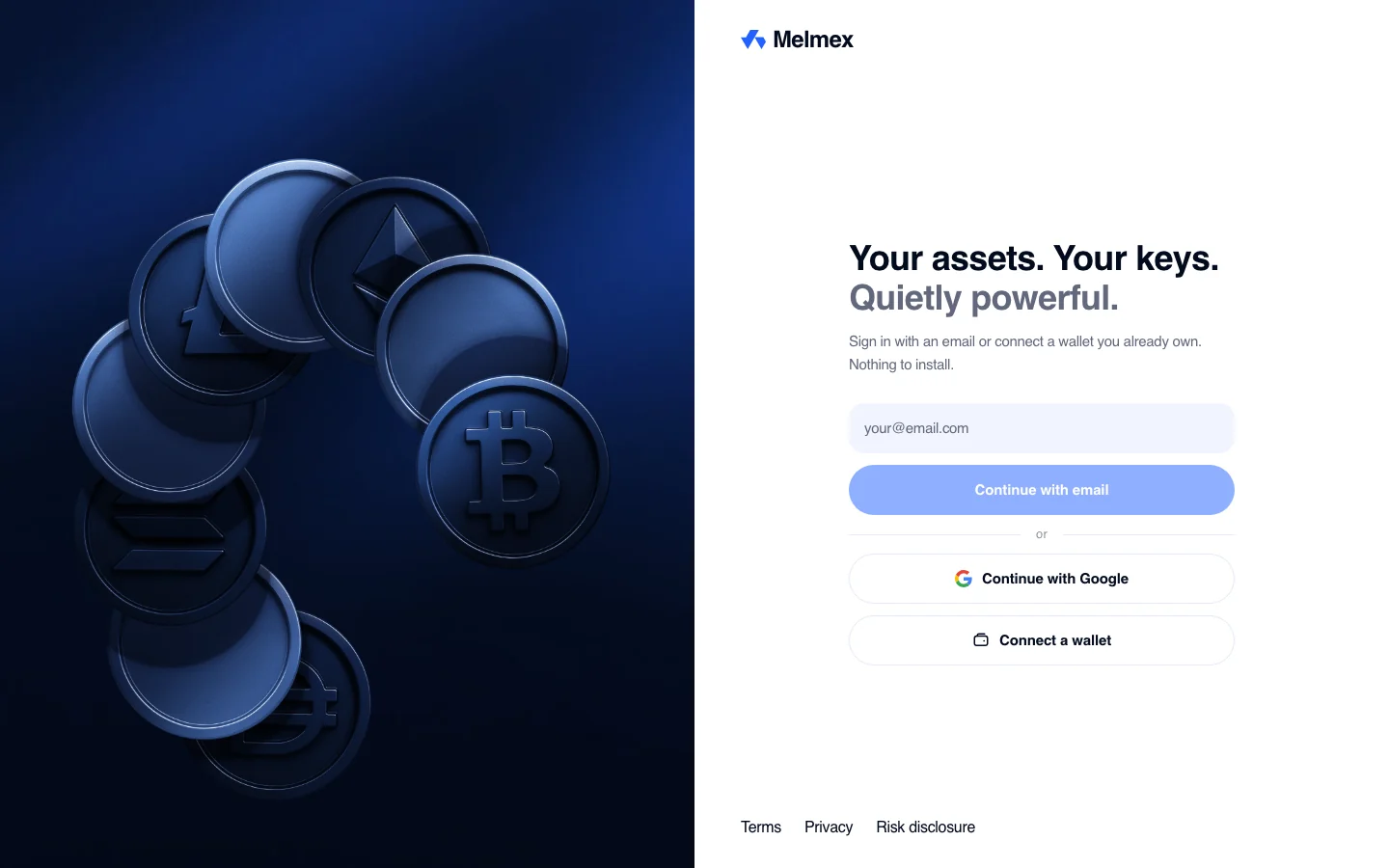
Your assets. Your keys. Quietly powerful.
What it is.
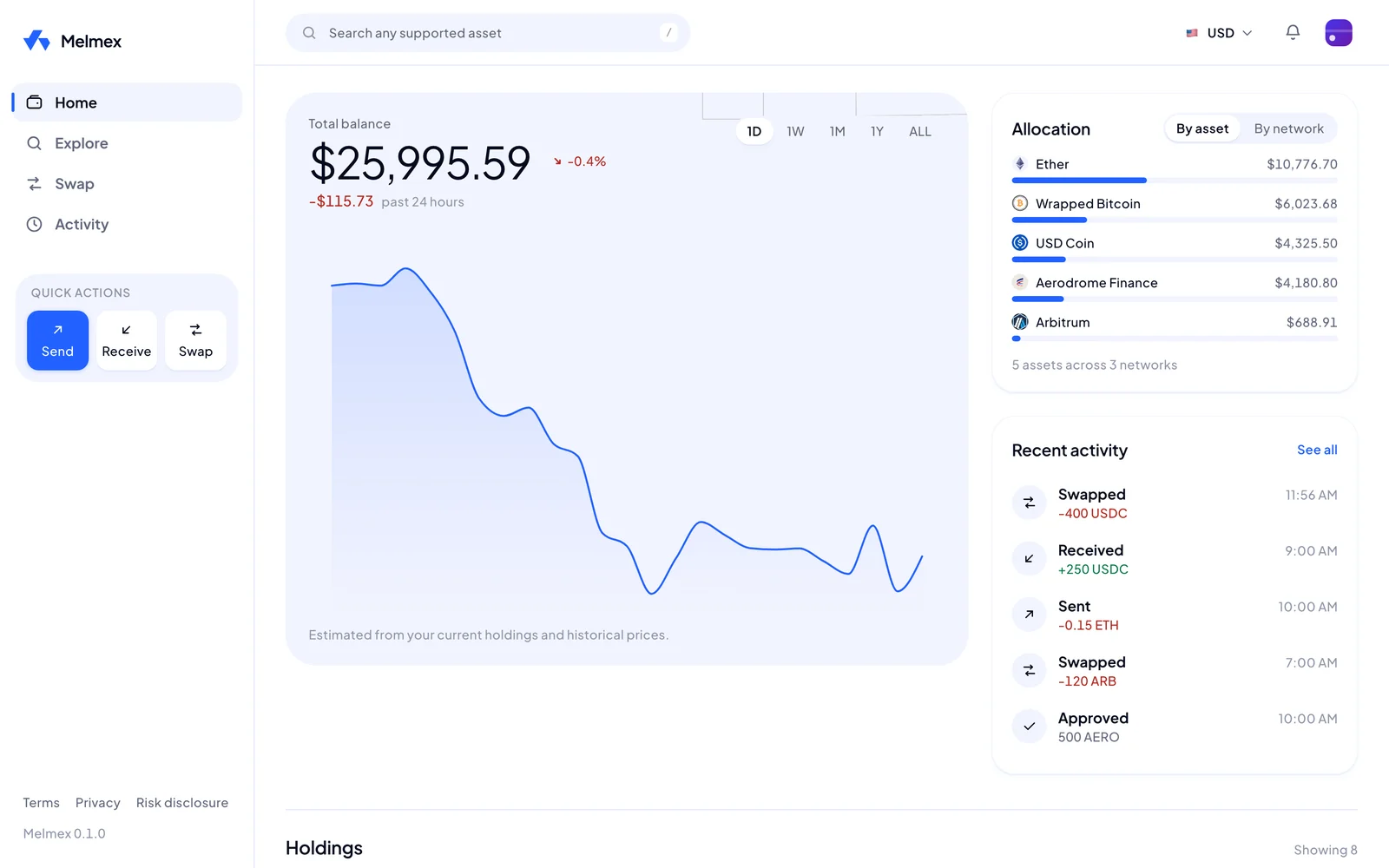
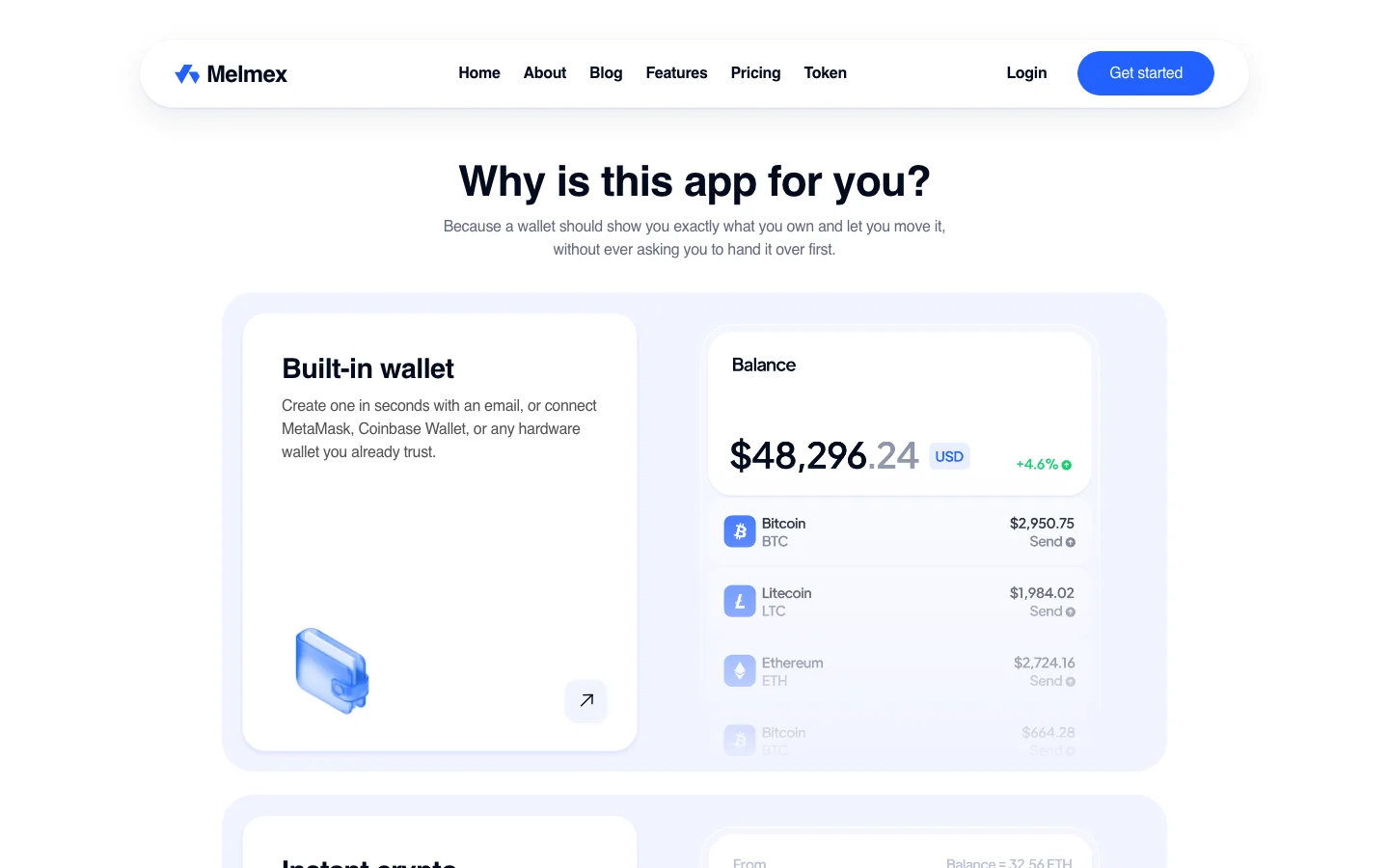
A self-custodial web wallet: portfolio, send, receive and swap across 13 EVM networks, with keys that never leave your device.
Melmex is a self-custodial wallet that runs in the browser on any computer or phone, with nothing to install. It shows everything a user holds across thirteen EVM networks as one balance, lets them send, receive and swap, and signs every transaction locally through embedded wallets by Privy, so Melmex never holds keys or funds. LetrionAi built the whole product: the framework-free domain core, the wallet app, the server-side data layer, the marketing site, the CI gates and the Node.js deployment on Hostinger.
People who hold digital assets are stuck between custodial services that keep their keys and wallets that hand over a seed phrase and wish them luck. Balances are scattered across networks, spam tokens sit next to real money, and hype-driven products push earn and trade features that carry regulatory risk. Melmex had to be a calm, honest wallet: one address and one total across many networks, keys that stay on the device, guardrails that stop real mistakes before anything is signed, no analytics or trackers, and nothing that reads as unfinished.
What we built.
Embedded wallets and sign-in by Privy (email, Google, external wallets via WalletConnect); no key material ever touches Melmex code.
One portfolio across 13 EVM networks: live balances, prices in 44 display currencies, line and candlestick charts, NFTs, spam quarantine.
Send flow with ENS resolution, EIP-55 checksums, address-poisoning warnings and a gas preflight that blocks sends that would revert.
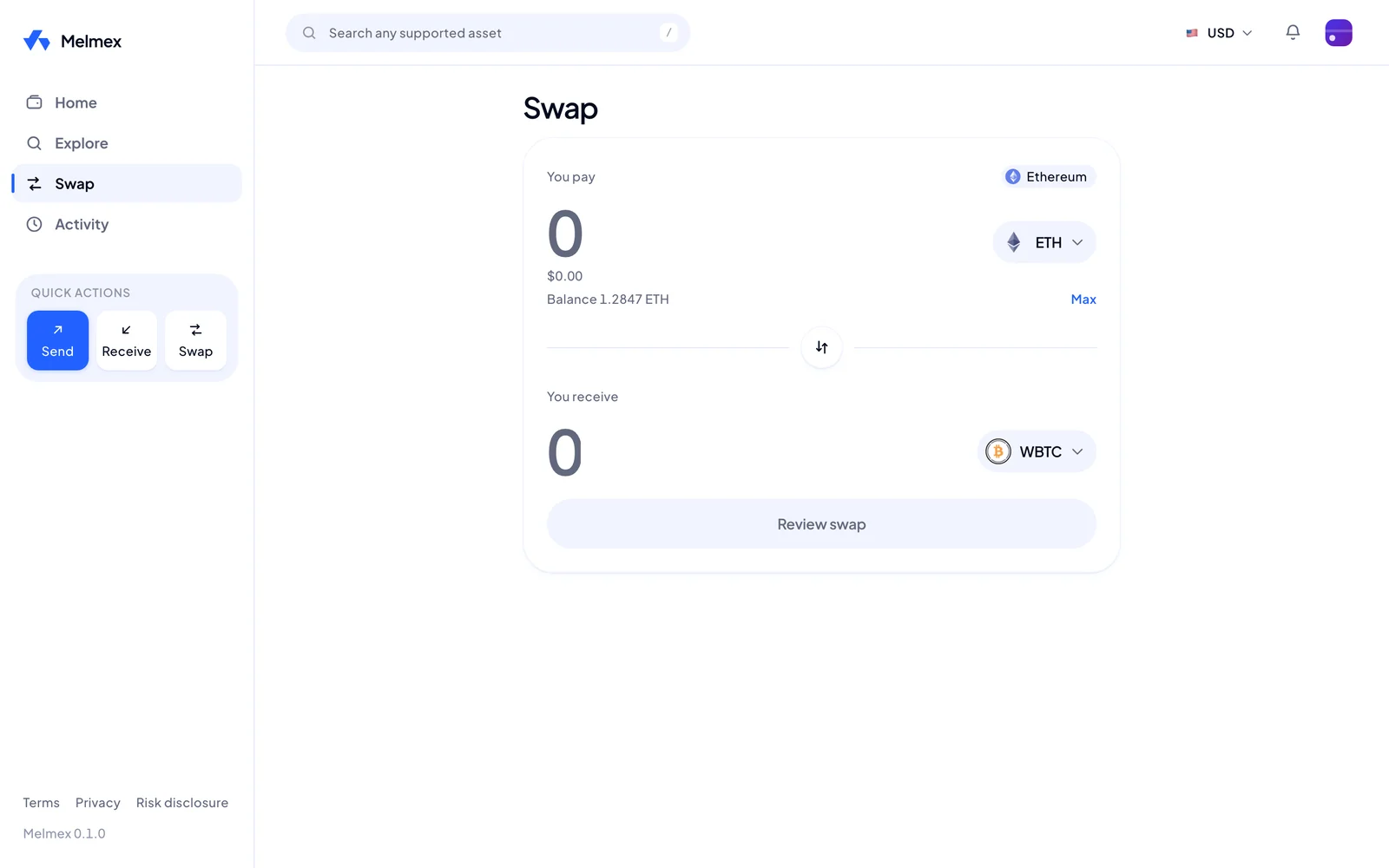
Swap via 0x Swap API v2: exact-amount approvals, 3% price-impact warning, 10% typed-confirmation block, 30-second quote freshness.
Zod-validated proxy routes with rate limiting and TTL caching over Alchemy, CoinGecko and DefiLlama; secrets never reach the browser.
Explore screen listing 230 curated assets across 13 networks, each priced with a seven-day trend, whether or not the user holds it.
Framework-free core package: bigint-only money math, chain registry, typed i18n and API schemas; 159 unit and 80 Playwright e2e tests.
Marketing site, blog and legal pages, plus a wallet-signature admin panel (MySQL waitlist and applications); Node.js on Hostinger.
The stack.
- Next.js 16 (App Router)
- React 19
- TypeScript (strict)
- Tailwind CSS 4
- pnpm workspaces + Turborepo
- Privy (embedded wallets and auth)
- wagmi 3
- viem 2
- 0x Swap API v2
- Alchemy (Portfolio, Transfers, NFT API, RPC)
- CoinGecko + DefiLlama (prices, charts, FX)
- WalletConnect / Reown
- ENS resolution
- TanStack Query 5
- Zod 4
- MySQL (mysql2)
- d3-shape
- qrcode.react
- Vitest
- Playwright
- GitHub Actions CI
- Node.js on Hostinger (Passenger, Next standalone)
The screens.

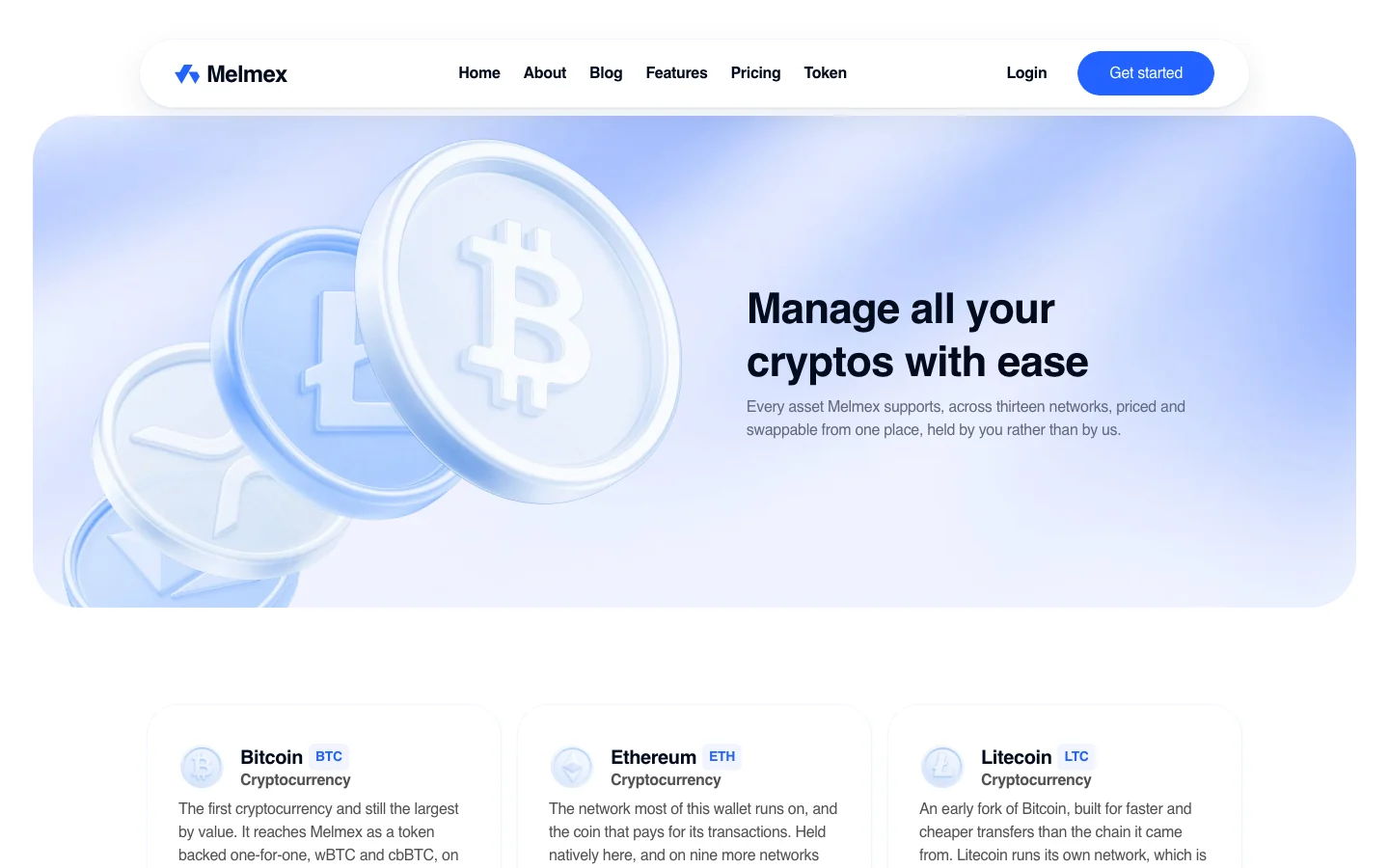
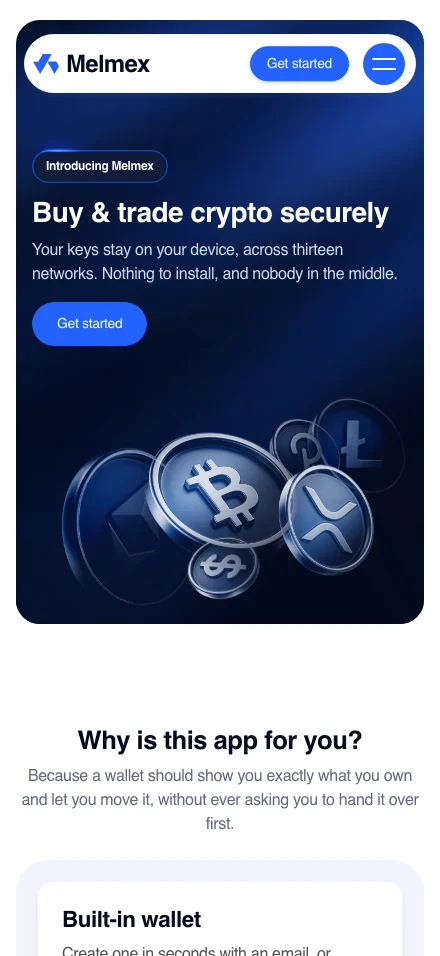
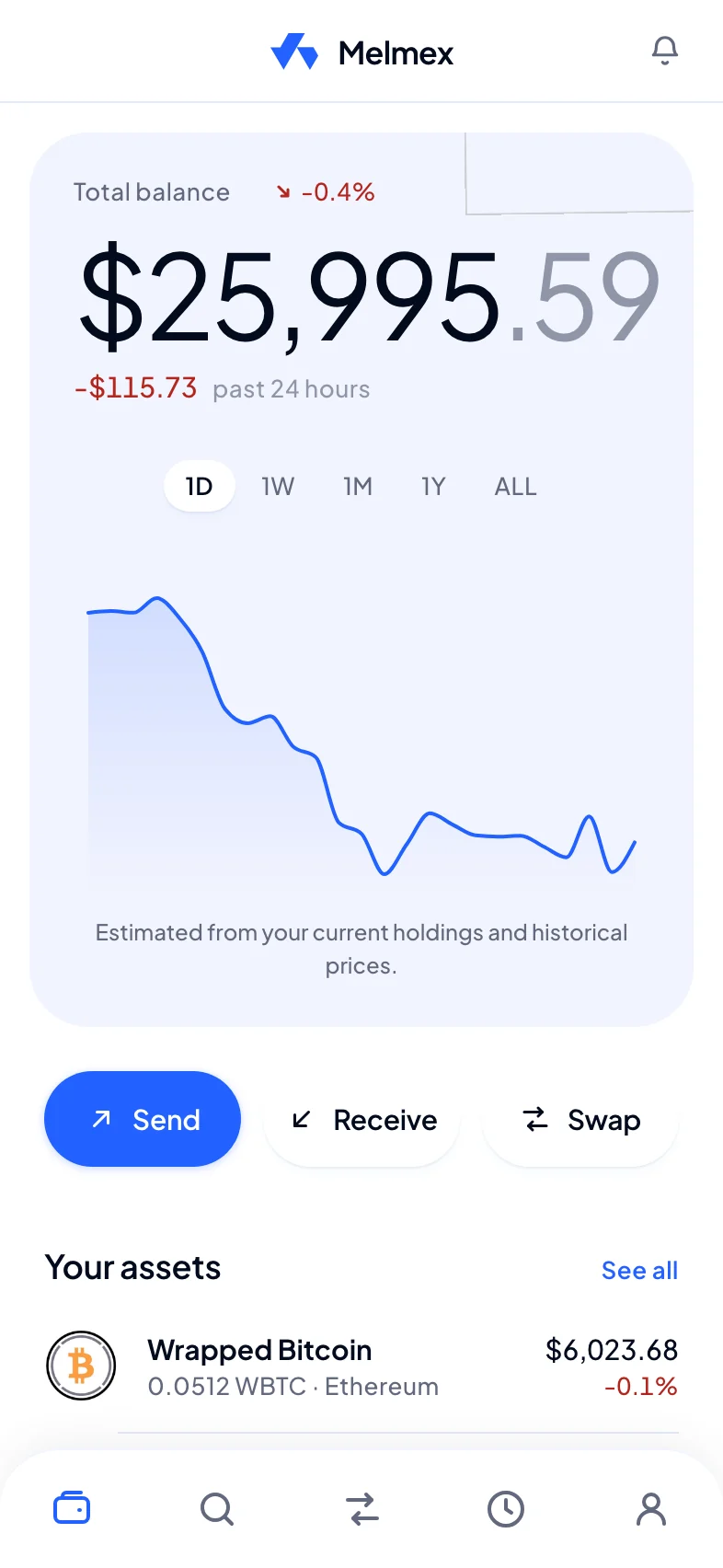
Results.
Live at melmex.io as a Node.js app on Hostinger; marketing site, blog, legal pages and the wallet ship from one Next.js build.
13 EVM networks from one address, from Base and Ethereum to Linea, Scroll, Unichain, World Chain, Ink and Berachain.
230 curated asset listings across 13 networks, each verified on-chain and priced live.
44 display currencies with live FX rates; every amount is stored in USD and converted only at the presentation layer.
Phase 5 Lighthouse audit (Aug 2026): performance 100, accessibility 100, SEO 100 on the landing pages (LCP 0.8s, CLS 0).
159 unit tests and 80 Playwright e2e tests; CI adds a zero-env build, bundle-secret and vocabulary gates and pnpm audit.
Every build phase closed by a multi-reviewer adversarial audit; every confirmed finding fixed and logged in DECISIONS.md.
No analytics, no trackers and no server-side storage of wallet addresses; the swap fee is held at 0 pending MiCA legal advice.
Measured on the Hostinger host: TTFB about 330ms, DOM ready about 730ms cold, page changes about 110ms after hover prefetch.